

Most office cleaning contracts fail quietly. Nobody cancels after a bad first week. The decline starts around month three, when a restroom gets skipped on a Friday, a breakroom fridge goes untouched for a month, and the conference room carpet starts to look tired. By the time a tenant complains, the standard has already slipped. A written commercial office cleaning checklist is the simplest tool a facility manager has to stop that slide, because it turns "keep the office clean" into a list of tasks with a frequency attached to each one.
Impact Cleaning Services has run office cleaning programs since 1954, and the checklist below is the same structure our crews work from in Nashville, Memphis, Knoxville and across Michigan and New York. Use it to build your own scope of work, to audit a vendor you already have, or to compare bids on equal terms.
Why a Written Checklist Matters More Than the Vendor's Promise
Every proposal promises reliability. Almost none of them list what gets done on a Tuesday night versus the last Friday of the month. That gap is where most disputes start. A scope line that reads "general janitorial, five nights a week" cannot be enforced, because there is nothing to point at when standards drop.
A task-by-task checklist fixes that. It gives the crew a defined routine, gives the supervisor something to inspect against, and gives the facility manager a document to hold up during a quarterly review. It also exposes the hidden costs in a bid. When one vendor includes monthly carpet spot treatment and another lists it as an add-on, the cheaper quote is not always the cheaper contract. Our Nashville office cleaning pricing guide covers how those line items move the final number.
The checklist below is split by frequency: daily, weekly, monthly and quarterly. Treat it as a starting point. A 4,000-square-foot accounting firm and a 60,000-square-foot call center need different frequencies, and the section near the end explains how to adjust.
Daily Office Cleaning Tasks
Daily tasks are the ones that keep an office looking occupied and cared for. Most of them take minutes each, but skipping any one of them for two or three days is immediately visible to staff and visitors. In a standard office program, these run every night the building is in use, which is the core of a daily janitorial cleaning service.
Entrances, Lobby and Reception
- Vacuum entrance mats and sweep or mop hard-surface entry floors
- Wipe glass doors and sidelights at hand height, inside and out
- Dust and wipe the reception counter, waiting-area tables and seating
- Empty lobby trash and recycling, replace liners
- Spot-clean fingerprints on door handles, push plates and elevator buttons
- Straighten magazines, brochures and furniture
Workstations, Offices and Conference Rooms
- Empty desk-side trash and recycling bins, replace liners as needed
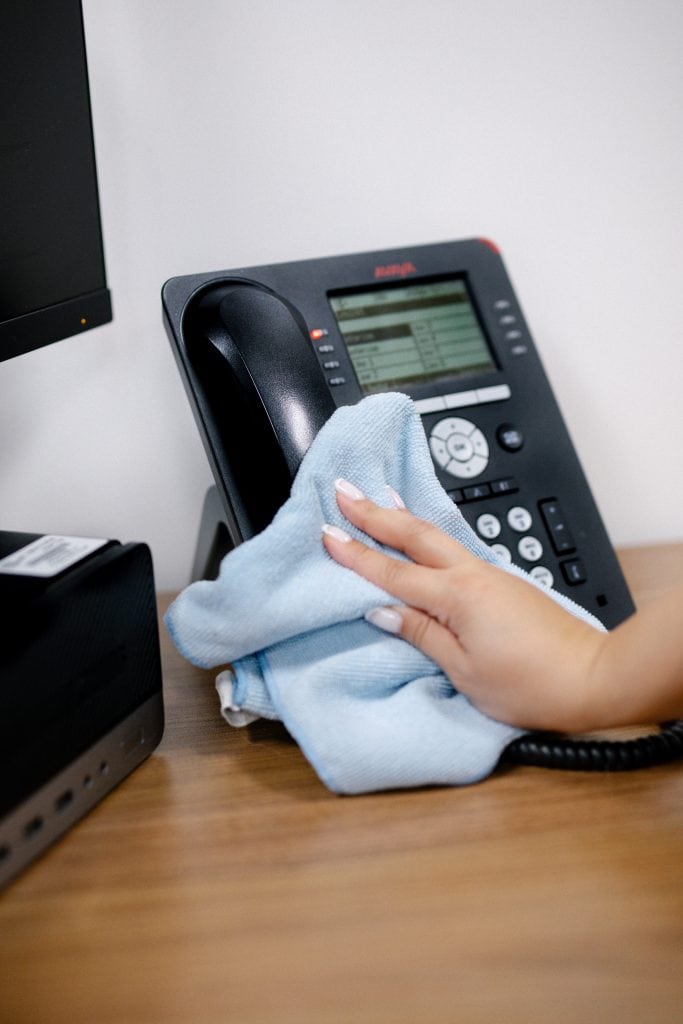
- Wipe conference tables, credenzas and shared phone handsets
- Spot-clean glass partitions and interior doors
- Vacuum carpeted traffic lanes and around desks (full vacuum on a set rotation if the building prefers)
- Dust reachable horizontal surfaces that are clear of personal items
- Reset conference room chairs, erase whiteboards if marked "erase"
Restrooms
- Clean and disinfect toilets, urinals and sinks, including the underside of seats
- Wipe and disinfect counters, partitions at touch points, and door handles
- Clean mirrors and polish chrome fixtures
- Restock toilet paper, hand towels, soap and seat covers
- Empty trash and sanitary bins, replace liners
- Sweep and damp-mop the floor with a disinfectant cleaner
- Check drains, report leaks, running toilets or broken dispensers
Breakroom and Kitchen
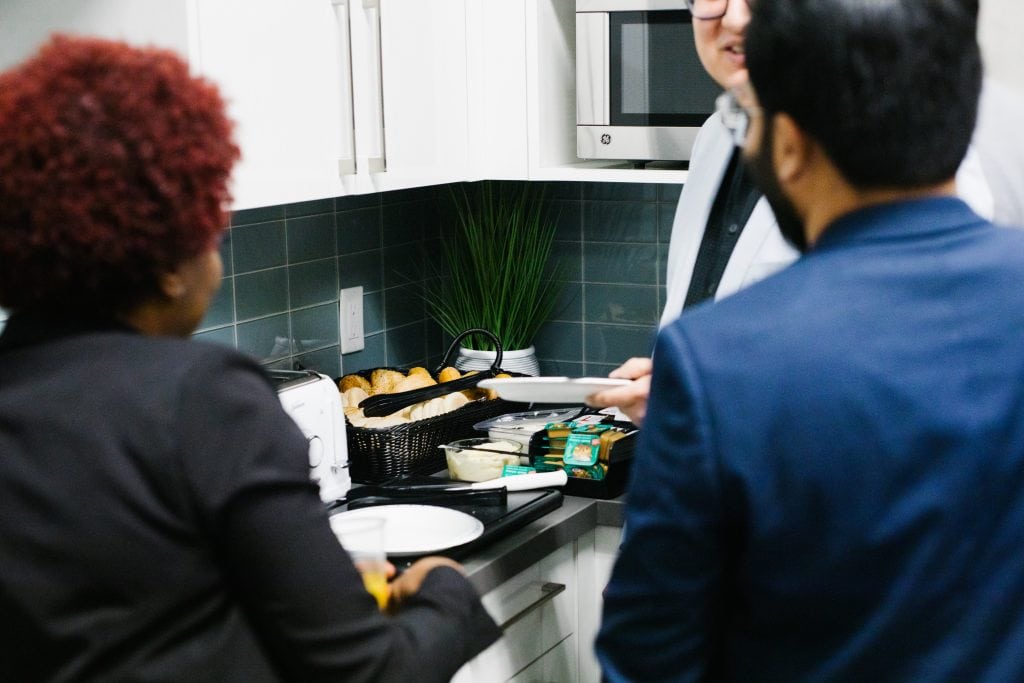
- Wipe and disinfect counters, tables and chair backs
- Clean the exterior of the microwave, coffee machine and fridge, and the inside of the microwave
- Clean the sink and faucet, remove any dishes left to the agreed location
- Empty trash and recycling, replace liners, wipe the lid of the bin
- Sweep and damp-mop the floor
Floors, Corridors and Stairwells
- Vacuum corridor carpet and stair treads
- Dust-mop and damp-mop hard floors in corridors and copy areas
- Spot-clean spills and scuffs on hard floors
- Wipe stair handrails and elevator interiors
- Lock doors, turn off lights and set alarms per the building's closing procedure
Weekly Office Cleaning Tasks
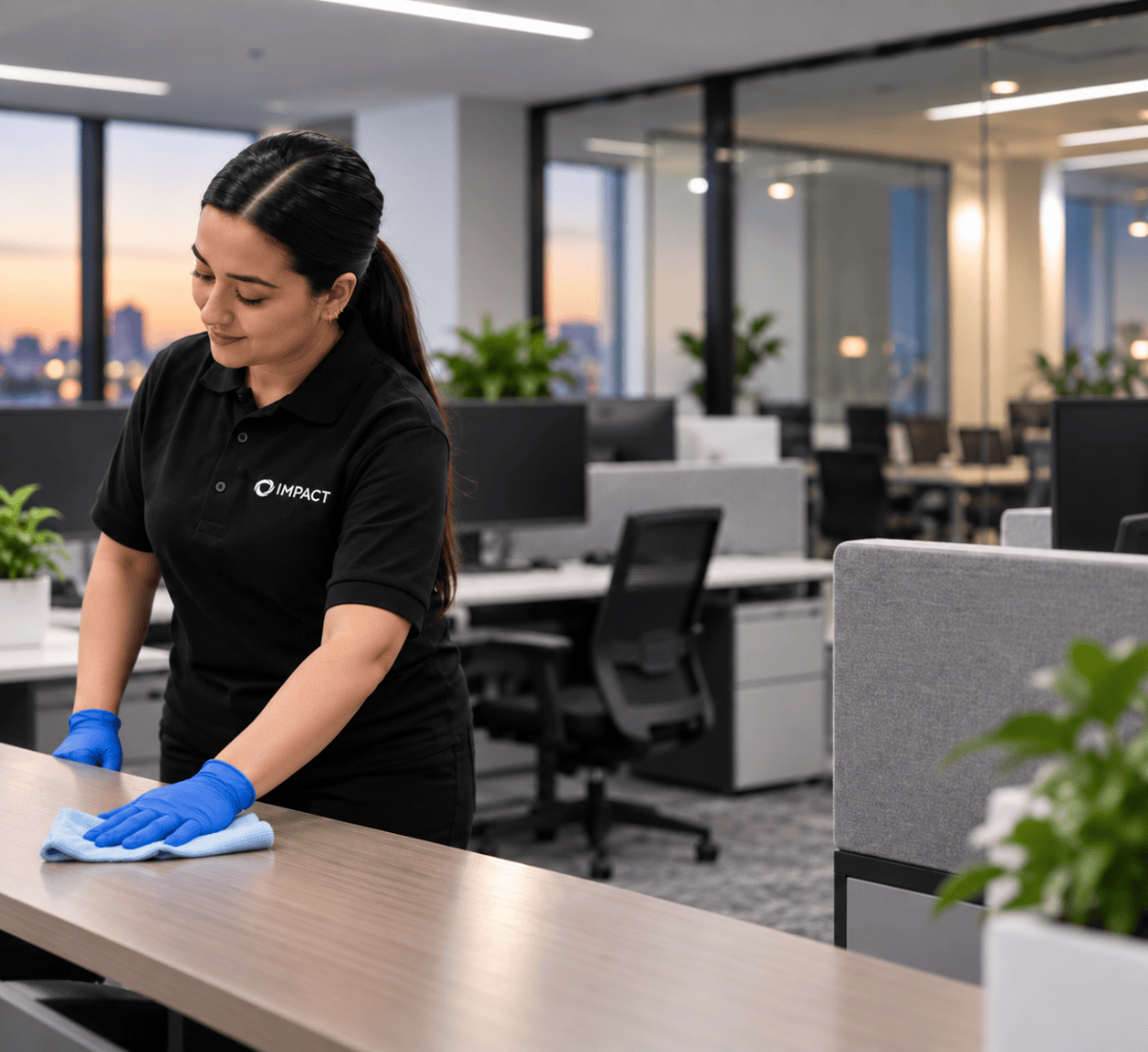
Weekly tasks are the layer that keeps a daily program from drifting. They cover the surfaces that do not get dirty in a single day but look neglected after seven. Most crews assign these to one night a week so the daily routine stays on schedule.
- Full vacuum of all carpeted areas, including under desks and along edges
- Machine-scrub or thorough mop of all hard floors, including corners and under furniture where accessible
- Dust window sills, ledges, picture frames and the tops of filing cabinets
- Wipe and disinfect light switches, door frames and shared keyboards in common areas
- Clean the inside of the breakroom fridge: discard items past the posted date, wipe shelves
- Deep-clean restroom partitions, tile grout lines at floor level and the base of fixtures
- Clean interior glass in conference rooms and offices to full height
- Polish stainless steel on elevators, water fountains and kitchen appliances
- Wipe down chair arms, bases and casters in conference rooms
Monthly and Quarterly Office Cleaning Tasks
These are the tasks facility managers most often discover are missing from a contract. They are easy to leave off a bid because nobody notices their absence for a few months. By then the vendor is entrenched and the work gets priced as an extra.
Monthly
- High dusting: air vents, ceiling corners, tops of partitions, light fixtures and exposed ductwork
- Dust blinds and clean window tracks
- Wipe down baseboards and door kick plates throughout
- Vacuum upholstered furniture and spot-treat stains
- Carpet spot treatment in traffic lanes and under desks
- Clean and disinfect trash bins inside and out
- Wipe walls near light switches, corridors and behind trash cans where scuffs build
- Descale coffee machines and clean the dishwasher filter if the building has one
Quarterly or Semi-Annual
- Hot-water carpet extraction across all carpeted areas (see commercial carpet cleaning)
- Strip and refinish, or scrub and recoat, VCT and other resilient hard floors
- Exterior and interior commercial window cleaning to full height
- Clean light diffusers and lenses
- Clean the tops of cabinets, shelving and HVAC return grilles
- Deep-clean breakroom cabinets inside and out
- Inspect and replace worn entrance matting
How to Adjust the Checklist for Your Building
Frequency should follow traffic, not habit. A building with 40 people and two restrooms can run a lighter restroom routine than a building with 400 people sharing eight. The fastest way to get this right is to count: how many people use each restroom per day, how many entrances see outdoor foot traffic, and how many conference rooms are booked more than twice a day. Those three numbers drive most of the frequency decisions.
Some offices need a layer this checklist does not include. Medical and dental suites follow a different protocol with disinfectant dwell times and clinical waste handling, which we cover in our comparison of medical and dental office cleaning protocols. Offices with a large female workforce should add a scheduled feminine hygiene bin service rather than leaving sanitary disposal to the nightly crew. Buildings in older downtown stock often need more frequent high dusting because of how the HVAC moves air, a point covered in our piece on indoor air quality in commercial buildings.
Also decide what the crew should not touch. Desks with personal items, server rooms, lab benches and executive offices with confidential paperwork usually get a "do not disturb" rule. Write those exclusions into the scope so the vendor cannot be blamed for skipping them and cannot be blamed for touching them either.
How to Use This Checklist With a Cleaning Vendor
Hand the checklist to every bidder and ask them to mark each line as included, excluded or priced separately. That single step turns three incomparable quotes into a side-by-side comparison. It also surfaces the vendor who hesitates on insurance, staffing or verification, which are the questions we walk through in how to choose a commercial cleaning company.
Once a contract is signed, the checklist becomes the inspection sheet. A supervisor should walk the building against it on a set cadence, weekly at first and then monthly once the program is stable, and log the result. A digital checklist with timestamps is better than a paper one, because it produces a record a facility manager can review without being on site at 11 p.m.
Finally, revisit the checklist every six months. Headcount changes, floors get reconfigured, a new tenant moves in. A scope that was right in January is often wrong by July, and the vendor will rarely raise it on their own.
Frequently Asked Questions
How often should a commercial office be cleaned?
Most occupied offices need a nightly service for restrooms, trash, breakrooms and floors, with weekly and monthly layers on top. Smaller offices with under 20 staff can sometimes run three nights a week, but restrooms and trash should still be handled every working day.
What is the difference between janitorial and commercial cleaning?
Janitorial usually means the recurring daily and weekly work in this checklist. Commercial cleaning is the broader category and includes periodic and specialty work such as carpet extraction, floor refinishing, window cleaning and post-construction cleanup. Many vendors offer both, but the periodic work is almost always quoted separately.
Should the cleaning crew supply consumables?
Either model works, but it must be stated in the contract. Vendor-supplied consumables (paper, soap, liners) simplify ordering but are usually marked up. Client-supplied consumables are cheaper per unit but someone in the building has to manage stock. Decide before the bid, not after the first invoice.
Get a Program Built on This Checklist
A checklist is only as good as the crew running it. Impact Cleaning Services builds every office program from a written, task-by-task scope with a frequency on each line, verified by supervisor inspections and logged per visit. We serve offices across Nashville, Memphis, Knoxville, Detroit and Grand Rapids, as well as Western New York.
If you would like this checklist priced for your building, contact Impact Cleaning Services for a walkthrough and a scope you can hold us to.